The Story of The Trinity Session
Cowboy Junkies
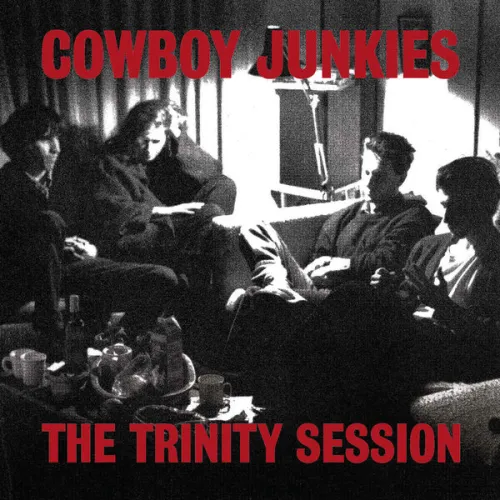
The Trinity Session is the second studio album by the Canadian band Cowboy Junkies, released in 1988 by RCA Records. It has become the band’s most iconic work and one of the cult albums of 1980s alternative rock and country-rock, appreciated for its intimate sound, relaxed atmosphere, and minimalist approach.
The album was recorded in November 1987 at St. Ann’s Church in Toronto, which was transformed into a makeshift recording studio. The band and their producer, Peter Moore, used a single Schoeps condenser microphone that captured all the musicians playing in the center of the church, creating a sense of space, warmth, and suspended time. This single-microphone recording technique contributed to the album’s fame, giving it a very distinctive acoustic texture, with natural echo and reverberant ambience that can be heard throughout the album.
Musically, The Trinity Session straddles the line between country, folk, and slow, contemplative rock, with an aesthetic influenced by both classic country and American alternative rock. The whispering, tightly controlled voice of Margo Timmins, the band’s lead singer, serves as the axis around which the melodies are built. Michael Timmins’s guitar, Jeff Bird’s bass, and Peter Timmins’s percussion maintain a slow, minimalist, and highly atmospheric rhythm, with moments where slide guitar, pedal steel, and other Tex-Mex instruments add details of texture and soundscape.
One of the album’s most famous tracks is the cover of “Sweet Jane,” originally by The Velvet Underground, which is reinterpreted in a very long version, shifting between slow, measured passages and more rhythmic, personal sections. This version became an anthem for the band and one of the songs that attracted the most listeners to the Cowboy Junkies, including in markets outside Canada. Also noteworthy are the cover of “Blue Moon Revisited (Song for Elvis),” featuring Roy Orbison on backing vocals, and original compositions such as “Misfit Kid,” “I’m So Lonesome I Could Cry” (a Hank Williams cover), and “Postcard Blues,” which reinforce the group’s blend of country, blues, and singer-songwriter pop.
The album was released at a time when alternative rock and neo-country were in full swing, and although it wasn’t an immediate massive hit, it gradually gained a following thanks to word of mouth and airplay on college radio and independent rock stations. Over time, The Trinity Session was reissued in multiple formats and increased its presence on “best albums of all time” lists in music magazines and websites. The original reissue consists of 12 songs in its standard version, though extended versions have since been released that include additional tracks and rarities from the church session.
Beyond the sound, The Trinity Session is remembered as a milestone in the way of conceiving the rock album as an intimate and almost spiritual document, where the acoustics of the venue, the reverent atmosphere of a church, and the simplicity of the production take on as much importance as the songs themselves. This approach helped cement the Cowboy Junkies’ identity as a cult band, with a repertoire defined by slowness, introspection, and emotional empathy.
History of Cowboy Junkies
Cowboy Junkies is an alternative rock band from Toronto, Canada, formed in 1985 by siblings Michael Timmins (guitar), Peter Timmins (drums), and Margo Timmins (vocals), along with bassist Alan Anton. Although their sound is sometimes reminiscent of country and folk, the group prefers to define itself as a rock band with a strong atmospheric and melancholic style. Their career has largely unfolded outside the mainstream spotlight, but they have a very loyal fan base that has followed them since the 1980s.
Before The Trinity Session, the band released their first independent album, Whites Off Earth Now!!, in 1986, which was recorded under modest conditions and featured a rawer, more experimental sound. Even so, the band’s slow, sensual aesthetic was already evident, as was Margo Timmins’ ability to transform other people’s songs (covers and reinterpretations) and make them her own. That debut laid the groundwork for what would solidify in The Trinity Session and subsequent albums: a slow rock-pop style, with cinematic atmospheres and a musical language of very few notes yet deeply rich in meaning.
After achieving cult fame with The Trinity Session, Cowboy Junkies signed a contract with an international record label and expanded their catalog with new studio albums. Following The Caution Horses (1990), in which they explored somewhat more electric and rock-oriented sounds, the band returned to restraint and minimalism in works such as Black Eyed Man (1992), 20 Lang Street: Demos, 1985–1986 (1994), Now, Diabolical (1996), and other albums that remain true to their aesthetic, without following the trends of the moment. In many of them, the lyrics focus on loneliness, love, faith, and everyday life, approached from a poetic perspective and with a certain irony or detachment.
The focus on a relatively consistent sound over the years, rather than constantly changing styles, has helped the Cowboy Junkies maintain a highly recognizable coherence. Their catalog includes both new studio albums and collections of rarities, live recordings, and special reissues of their historic sessions. The band has remained active on international tours and in recording new material, though they have never sought mass fame, preferring cult status and a more direct relationship with their audience.
Throughout their career, Cowboy Junkies have become a benchmark for what has been called “slow country” or “melancholic rock,” influencing later bands that also embrace slowness, intimacy, and warmth in their songwriting. Their work, led by The Trinity Session, continues to be celebrated as a model of how to combine sonic minimalism, intimate atmospheres, and songs of great emotional depth—far from the spectacular but very close to authenticity.
Songs from The Trinity Session with durations
- Book of Hours – 4:13
- Walkin’ After Midnight – 4:16
- Ring Them Bells – 4:29
- Dead Man’s Hand (Anything but Love) – 6:51
- Postcard Blues – 3:19
- Ice Horses – 4:22
- Blue Moon Revisited (Song for Elvis) – 3:19
- Trinity Revisited (Intro) – 0:41
- Trinity Revisited (Walkin’ After Midnight) – 4:14
- Trinity Revisited (Misfit Kid) – 3:55
- Trinity Revisited (Misfit Kid) Live at Trinity 1988 – 4:13
Cowboy Junkies Discography (Major Studio Albums)
- Whites Off Earth Now!! (1986)
- The Trinity Session (1988)
- The Caution Horses (1990)
- Black Eyed Man (1992)
- 20 Lang Street: Demos, 1985–1986 (1994)
- Now, Diabolical (1996)
- Open (1998)
- Space Can (2000)
- One Soul Now (2004)
- At the End of Paths Taken (2007)
- Trinity Revisited (2007)
- Renmin Park (2010)
- The Wilderness (2012)
- The Things We Lost in the Fire – A Return to the Trinity (2014)
- All That Reckoning (2018)
- Such Ferocious Beauty (2023)