History of Paris
Supertramp
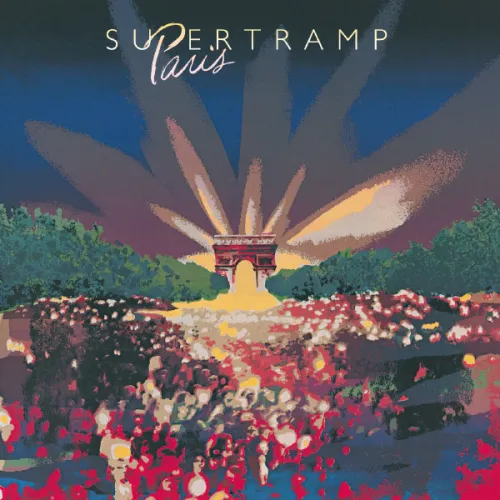
Paris is the first live album by the British band Supertramp, released by A&M Records in September 1980. The album was recorded during the promotional tour for Breakfast in America at the Pavillon de Paris in France, primarily during the concert on November 29, 1979. The venue, a former slaughterhouse converted into a concert hall, lent a unique atmosphere to the recording, which sought to capture the band"s energy at the height of their popularity.
The project was originally going to be titled Roadworks, but the name Paris was ultimately chosen, emphasizing the connection to the city where the main concert was recorded. The album"s setlist features live versions of Supertramp"s best-known songs from Crime of the Century (1974) to Breakfast in America (1979), thus spanning the band"s most creatively and commercially successful period. As such, it serves as a kind of live summary of their classic era.
Among the songs included on Paris are iconic tracks such as "School," "Bloody Well Right," "The Logical Song," "Breakfast in America," "Goodbye Stranger," and "Take the Long Way Home," among others, all performed with arrangements that remain very faithful to the studio versions but with the added energy of a live performance. The band was in the midst of a world tour at the time, and the Paris concert captured on the album corresponds to the final stretch of the Breakfast in America tour, during which Supertramp headlined major venues and enjoyed enormous international popularity.
The sound of the album reflects the band"s care to accurately reproduce the complex arrangements and vocal harmonies that characterize their studio work.
In terms of structure, Paris was originally released as a double LP that captured the feel of a full concert, with a sequence designed to maintain the tension and dynamism of the performance. Although most of the material comes from the November 29, 1979, concert, some sources indicate that excerpts from other concerts on the tour were also used to complete the set, in accordance with the common practice for many live albums. The mixing and post-production were carried out with special attention to the balance between instruments and the audience, aiming for a powerful yet clear sound.
Commercially, Paris was very well received. In the United States, it reached number 8 on the Billboard 200 chart in late 1980 and went gold almost immediately, reflecting Supertramp"s enormous popularity at the time. In addition, the live version of "Dreamer" included on the album was released as a single and reached the Top 20 on the U.S. charts, further boosting the project"s visibility.
From a historical perspective, Paris is also significant for documenting one of Supertramp"s final tours with its classic lineup, before Roger Hodgson"s departure in 1983. The album captures the chemistry between Hodgson and Rick Davies, as well as the pivotal role of John Helliwell, Dougie Thomson, and Bob Siebenberg in shaping the band"s sound. For this reason, many fans consider it a key document for understanding the band"s live performances at their peak.
Over time, Paris has been the subject of reissues and remasters that have improved its sound quality and, in some cases, recovered additional material, according to sources focused on its history. These editions have helped keep interest in the album alive, highlighting it as a classic among live rock albums from the late 1970s and early 1980s. It remains a benchmark for both new listeners and fans who wish to relive the experience of Supertramp live during their golden age.
History of Supertramp
Supertramp was a British progressive rock and pop rock group formed in London in the late 1960s, considered one of the most influential bands of the 1970s and early 1980s music scene. The project originated around keyboardist and vocalist Rick Davies, who, with financial support from a patron, brought together several musicians to form a band initially called Daddy, which would soon adopt the definitive name Supertramp. Throughout their career, the group distinguished itself through a combination of accessible progressive rock, pop melodies, and introspective lyrics, as well as the contrast between the vocals and compositions of Davies and those of multi-instrumentalist Roger Hodgson.
The band"s first two albums, Supertramp (1970) and Indelibly Stamped (1971), were not major commercial successes, although they already displayed an experimental and progressive orientation. The situation changed with the reconfiguration of the lineup and the arrival of the classic lineup: Rick Davies, Roger Hodgson, Dougie Thomson (bass), Bob Siebenberg (drums), and John Helliwell (saxophone and horns). With this stable core, Supertramp found a balance between progressive ambition and pop sensibility that would define their most celebrated albums.
The major turning point came with Crime of the Century (1974), considered the band"s breakthrough album. This work combined long compositions, elaborate instrumental passages, and introspective lyrics, and produced iconic tracks such as "Dreamer" and "Bloody Well Right." From there, the band continued to develop its style on albums such as Crisis? What Crisis? (1975) and Even in the Quietest Moments... (1977), which cemented their international reputation.
Supertramp"s greatest commercial success came with Breakfast in America (1979), which became a true global phenomenon. The album produced several singles that reached the international Top 10, such as "The Logical Song," "Breakfast in America," "Goodbye Stranger," and "Take the Long Way Home," and placed the band at the forefront of radio rock and large-venue touring. The tour associated with this album is precisely the one documented on the live album Paris (1980).
Following this peak in popularity, Supertramp released other studio albums such as ...Famous Last Words... (1982), after which Roger Hodgson left the group to focus on his solo career. From then on, Rick Davies took over as the band"s main leader, and the group continued with various lineups, releasing albums such as Brother Where You Bound (1985), Free as a Bird (1987), Some Things Never Change (1997), and Slow Motion (2002). Although these works did not achieve the massive impact of the classic era, they kept the band active and allowed them to continue touring.
Over the years, Supertramp has experienced periods of inactivity and revival, with Rick Davies as the only constant member. Later lineups have included musicians such as Mark Hart, Carl Verheyen, and others, who have helped recreate the classic repertoire live for new generations of audiences. According to sales figures cited in encyclopedic sources, the band has sold over 70 million albums worldwide, reflecting its global reach.
Supertramp"s legacy is rooted in a combination of musical sophistication and melodic accessibility. Their albums from the 1970s, particularly Crime of the Century, Even in the Quietest Moments... and Breakfast in America, are considered classics of progressive rock and pop rock, and continue to influence musicians of diverse styles. The contrast between Hodgson and Davies" compositions, along with the prominent use of keyboards, saxophone, and vocal harmonies, has kept their work relevant among critics and fans alike.
Supertramp Discography (major albums according to Wikipedia / complete discography)
- Supertramp (1970)
- Indelibly Stamped (1971)
- Crime of the Century (1974)
- Crisis? What Crisis? (1975)
- Even in the Quietest Moments... (1977)
- Breakfast in America (1979)
- ...Famous Last Words... (1982)
- Brother Where You Bound (1985)
- Free as a Bird (1987)
- Some Things Never Change (1997)
- Slow Motion (2002)