The Story of Lux
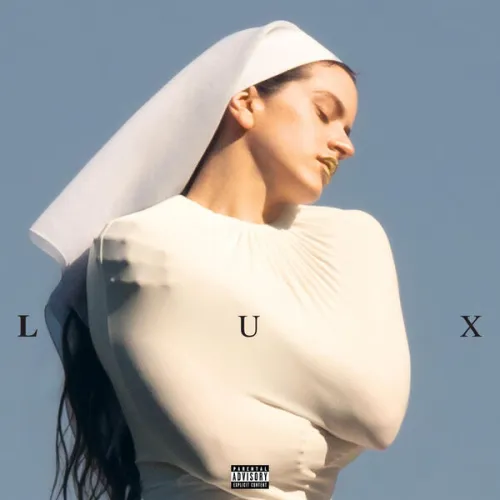
Lux is the fourth studio album by Spanish singer Rosalía, released on November 7, 2025, via Columbia Records, marking her return to full-length albums following the success of Motomami (2022). The project was conceived from the outset as a work of avant-garde orchestral and classical pop, recorded with the London Symphony Orchestra under the direction of Icelandic composer Daníel Bjarnason, with Rosalía herself serving as executive producer and overseeing every detail of the arrangements and musical narrative. The physical edition of the album includes eighteen tracks, while the digital edition omits three songs, reinforcing the idea of a more concentrated and linear experience on streaming platforms.
The creative process behind Lux spanned several years, during which Rosalía wrote lyrics in different languages and worked closely with arrangers and orchestrators to integrate elements of classical music into a contemporary pop context. The artist conceived the album structured into “movements” or chapters, a term inherited from the classical tradition, which frames the listening experience as a sort of uninterrupted journey through different emotional states. Critics from Pitchfork and other specialized media described the work as orchestral pop, avant-garde chamber pop, art pop, and avant-pop, highlighting its experimental nature and the way it blurs the boundaries between the highbrow and the popular.
Thematically, Lux focuses on the exploration of the divine feminine, personal freedom, and sanctity, while addressing Rosalía’s own personal growth and the wounds of past relationships. The New York Times—cited in the album’s encyclopedia entry—described it as “a labor of love that explores the divine feminine and the brutalities of romance,” while Alexis Petridis of The Guardian highlighted how religious imagery coexists with an earthly interpretation of heartbreak and revenge against an ex-partner. Songs like “Mio Cristo Piange Diamanti” are conceived almost as an aria, and Rosalía herself has explained that she set out to directly emulate the operatic tradition in her vocal delivery and in the construction of the musical climax.
Sonically, the production combines symphonic strings, choirs, and orchestral textures with elements of contemporary pop and electronic music, creating stark contrasts between intimate passages and moments of great sonic density. Critics highlighted how the album manages to sound both monumental and intimate, with arrangements that leave room for Rosalía’s voice to showcase her technique—inherited from her flamenco training—over harmonies and dynamics typical of classical music. Tracks like “Berghain,” the lead single, exemplify this blend by bringing together collaborations with cult artists such as Björk and Yves Tumor on a foundation where the symphony orchestra coexists with a production style more closely tied to the club scene.
“Berghain” was released as the lead single on October 27, 2025, and served to introduce the aesthetic of Lux prior to its full release. From there, the album was met with almost unanimous enthusiasm from international critics, who praised its conceptual ambition, the sophistication of its arrangements, and the artistic risk involved in making such a marked shift toward orchestral sounds following the urban and Caribbean sound of Motomami. On the Metacritic platform, Lux rose to become the second-highest-rated album of 2025 and one of the highest-rated albums of all time on the site, reflecting the critical consensus regarding its significance within contemporary pop.
The commercial impact of the album was equally remarkable: it broke Spotify’s record for the highest number of streams in a single day by a Spanish-speaking female artist, reaching 42.1 million streams on its release day. This success cemented Rosalía’s status as a central figure in global pop, capable of experimenting in areas close to classical music without losing touch with a mass audience.
Both mainstream and specialized media agreed that Lux marked a turning point in how we understand what a pop album can be, due to its symphonic scale and its willingness to integrate literary, religious, and biographical references into a single work.
Within Rosalía’s discography, Lux engages in a dialogue with both the vocal and structural experimentation of El mal querer and the stylistic freedom of Motomami, but takes it to a more contemplative and ceremonial realm. Critics and essayists have highlighted how the album consolidates a career marked by the fusion of genres—from flamenco to urban music, through pop and electronic—and, at the same time, ushers in a phase in which the singer unambiguously embraces the “total work” format characteristic of the classical tradition. The use of chapters or movements, the recurrence of melodic motifs, and the presence of a full symphony orchestra contribute to that sense of a closed, carefully designed cycle.
In more specialized academic and critical circles, Lux has been analyzed for its approach to spirituality from a contemporary and feminist perspective, as well as for its handling of the tension between sacredness and pop spectacle. Some articles highlight that the work is part of a line of projects that recontextualize the Catholic imagination in terms of empowerment and reflection on one’s own artistic identity, using the orchestra and the language of classical music as a vehicle for dramatization. This interpretation helps to solidify Rosalía’s image as an artist who innovates not only in sound but also in the way she narrates and symbolizes her personal experiences within the framework of popular culture.
Rosalía's Story
Rosalía Vila Tobella, known professionally as Rosalía, was born on September 25, 1992, in Sant Cugat del Vallès (Barcelona, Spain) and has become one of the most influential figures in contemporary global pop. From a very young age, she was drawn to Spanish popular music and, in particular, to flamenco, which led her to study musicology and flamenco singing at the Escola Superior de Música de Catalunya (ESMUC), where she developed a solid technical and theoretical foundation. Before achieving international fame, she combined her studies with performances in bars, at weddings, and at small events, honing her stage presence and vocal style.
Her first studio album, Los ángeles (2017), was a distinctly minimalist and experimental project in collaboration with producer Raül Refree, focused on a sober and contemporary reinterpretation of flamenco singing. Although its commercial impact was moderate, the album received widespread critical acclaim and established her as a refreshing voice within the genre, already signaling her interest in pushing beyond the traditional boundaries of flamenco. The true turning point came with her second album, El mal querer (2018), a concept album based on a 13th-century Occitan novel, in which she fused flamenco, pop, and R&B with a narrative divided into chapters, each associated with a song.
El mal querer catapulted Rosalía to international fame thanks to hits like “Malamente” and “Pienso en tu mirá,” which combined clapping, quejío, and flamenco harmonies with contemporary production and meticulously crafted music videos. The album received multiple awards, including Latin Grammys, and cemented her image as an artist capable of bringing flamenco to a global audience without sacrificing complexity or artistic ambition. In the following years, Rosalía expanded her presence in the international market through collaborations with artists such as J Balvin, Travis Scott, and Billie Eilish, and a series of singles that broadened her sonic palette to include reggaeton, Latin trap, and experimental pop.
In 2022, she released Motomami, her third studio album, which marked a radical shift toward a more fragmented, digital aesthetic characterized by urban beats, electronic music, and references to internet culture. The album was acclaimed for its formal audacity, its blend of genres, and its confessional approach to themes such as fame, sexuality, and vulnerability, reinforcing the perception of Rosalía as an “atypical pop star” capable of reinventing herself with every project. With Motomami, the artist embarked on an extensive world tour and performed massive concerts, such as the one she gave in Mexico City’s Zócalo before more than 160,000 people, continuing her global expansion.
Following that phase dominated by urban sounds, Rosalía directed her next major project, Lux (2025), toward a territory closer to classical music and orchestral pop, consolidating a career marked by risk-taking and constant evolution. On this album, she collaborated with the London Symphony Orchestra and created a work structured in movements that explores the divine feminine and heartbreak, which was interpreted as a reaffirmation of her desire to experiment with formats typical of classical music within the mainstream. Critics recognized Lux as a new milestone in her career, highlighting both the sophistication of the arrangements and the integration of her flamenco voice into a symphonic setting.
Throughout her career, Rosalía has been described as an artist of an unclassifiable genre, capable of moving between flamenco, R&B, reggaeton, cumbia, pop, and classical music without losing her own distinct identity. Her work has helped popularize flamenco among international audiences, while also opening up spaces for Latin pop to experiment with conceptual structures, narratives, and cultural references rarely seen in commercial music. This combination of vocal virtuosity, aesthetic curiosity, and conceptual ambition has made her one of the most influential and studied voices in 21st-century popular music.
Rosalía's Discography
- Los Ángeles (2017)
- El Mal Querer (2018)
- Motomami (2022)
- Lux (2025)
Lux on YouTube
The complete album Lux is available on YouTube in several videos that compile all the songs from the album.