History of Hijos Del Agobio
Triana
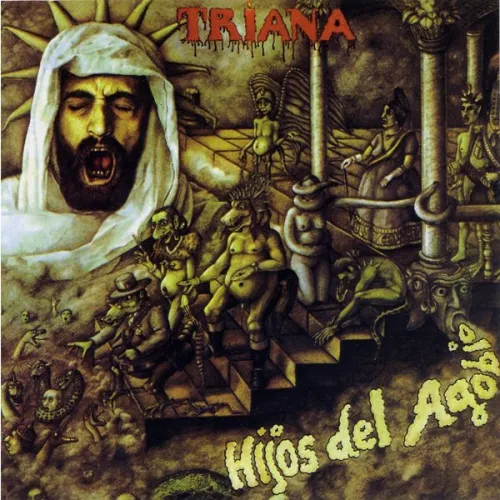
Hijos del agobio is the second studio album by the Seville-based band Triana, released in 1977 by the Movieplay label in the midst of Spain"s political transition. Along with El patio (1975) and Sombra y luz (1979), it is considered one of the most acclaimed albums of the golden age of Spanish progressive rock and a key piece of the so-called Andalusian rock movement. The album solidified the trio"s distinctive style, which fused symphonic and progressive rock with flamenco harmonies, rhythms, and sensibility.
The historical context surrounding the release of Hijos del agobio was particularly significant. Released at a critical moment in Spain"s modern history—following Franco"s death and in the midst of the democratic transition—the album incorporated political and social themes more explicitly into its lyrics. This blend of existential introspection, a celebration of freedom, and distrust of organized politics became one of the album"s defining features.
Songs like "Rumor" contain direct references to freedom ("The guitar spoke to the morning / of freedom"), reflecting the climate of hope and openness of the era. At the same time, the group expressed distrust toward institutional political discourse ("everyone pretends to know and say what you think / with elegant words and a stern demeanor at the same time"), underscoring a critical stance toward those who sought to capitalize on the change. This tension between hope and suspicion permeates the album"s overall tone.
The album"s structure combines pieces with a strong poetic and melodic charge with instrumental developments typical of progressive rock. The track list includes, among others, "Hijos del agobio," "Rumor," "Sentimiento de amor," "Recuerdos de Triana," "¡Ya está bien!," "Necesito," "Sr. Troncoso," and "Del crepúsculo lento nacerá el rocío," which closes the album with an almost dreamlike atmosphere. The vocals and lyrics of Jesús de la Rosa, together with the guitars of Eduardo Rodríguez and the group"s rhythmic and percussive foundation, shape an unmistakable sound.
Critically, Hijos del agobio is regarded by many experts as Triana"s finest work. According to reviews cited in biographies and articles, the album marked their artistic consolidation, achieving a masterful balance between progressive rock and flamenco roots. The single "Rumor" also garnered support from the radio stations of the time, helping the group reach a wider audience.
The album"s impact extended beyond the charts and sales. Triana was named the best band of the year by the magazine Record World, and their blend of urban poetry, Andalusian sensibility, and symphonic rock influenced numerous subsequent Spanish-language rock bands. Over time, Hijos del agobio has become an essential reference point when discussing the history of Andalusian rock and progressive rock in Spain.
History of Triana
Triana was a Spanish progressive rock and Andalusian rock band formed in Seville in the mid-1970s. The classic lineup consisted of Jesús de la Rosa Luque (vocals and keyboards), Eduardo Rodríguez Rodway (guitar), and Juan José Palacios "Tele" (drums and percussion). Their sound fused elements of symphonic and progressive rock with the rhythms, melodic twists, and sensibility characteristic of flamenco and the Andalusian musical tradition.
The group"s first album, El patio (1975), released by Movieplay (also cited as Fonomusic in other sources), eventually became a cult classic. Although its initial success was relatively modest, songs like "Abre la puerta," "En el lago,” and "Sé de un lugar" went on to become generational anthems. With that debut, Triana laid the foundations for Andalusian rock, a genre that encompasses bands blending progressive rock with flamenco and Mediterranean influences.
Their breakthrough came precisely with Hijos del agobio (1977). As noted in specialized biographies, this second album was hailed by critics as their best, both for the strength of its compositions and the depth of its lyrics. This recognition led to greater media exposure and established Triana as one of the most important Spanish rock bands of the late 1970s.
In 1979, they released Sombra y luz, which concluded an initial trilogy considered canonical within Spanish progressive rock. According to the sources cited, this album sold over 300,000 copies, earning the band its first platinum record. The success of Sombra y luz confirmed Triana"s impact and secured them a prominent place within the national scene.
The studio discography of the classic era was completed with Un encuentro (1980), Un mal sueño (1981), and Llegó el día (1983), all released by Movieplay / Fonomusic. These works maintained the band"s identity, though with an evolution toward sounds somewhat closer to the urban rock and pop of the era. At the same time, compilations such as 5th Anniversary (1980) were released, helping to further spread their legacy.
Triana"s career was abruptly cut short by the death of Jesús de la Rosa in a traffic accident on October 14, 1983. As Juan José Palacios "Tele" recalls in an interview cited in the bibliography, the loss left them "orphaned of a brother and orphaned of ideas, orphaned of music," effectively putting an end to the group"s creative life. This tragedy cemented the band"s almost mythical status within the collective imagination of Spanish rock.
In subsequent years, the name Triana has been the subject of various revivals and projects, while their original work continued to be reissued and reach new generations of listeners. Compilations such as Triana 92, Una historia, Una historia de la luz y de la sombra, Sé de un lugar, Quiero contarte, Recuerdos de una noche – 30th Anniversary, and Eternos Triana 50th Anniversary have helped keep their memory alive. Today, their early albums are considered essential for understanding the evolution of Spanish-language rock and Andalusian rock.
Triana Discography (studio albums and major compilations)
- El patio (1975)
- Hijos del agobio (1977)
- Sombra y luz (1979)
- Un encuentro (1980)
- Un mal sueño (1981)
- Llegó el día (1983)
- 5.º aniversario (1980, compilation)
- Triana 92 (1991, compilation)
- Una historia (1995, compilation)
- Una historia de la luz y de la sombra (2000, compilation)
- Sé de un lugar (2004, compilation)
- Quiero contarte (2008, compilation)
- Recuerdos de una noche - 30th Anniversary (2013, compilation)
- Eternos Triana 50th Anniversary (2024, compilation)
Hijos Del Agobio on YouTube
There are several videos on YouTube featuring the complete album Hijos del agobio, which include all eight songs from the album in order, including "Hijos del agobio," "Rumor," "Sentimiento de amor," "Recuerdos de Triana," "¡Ya está bien!", "Necesito", "Sr. Troncoso", and "Del crepúsculo lento nacerá el rocío".